
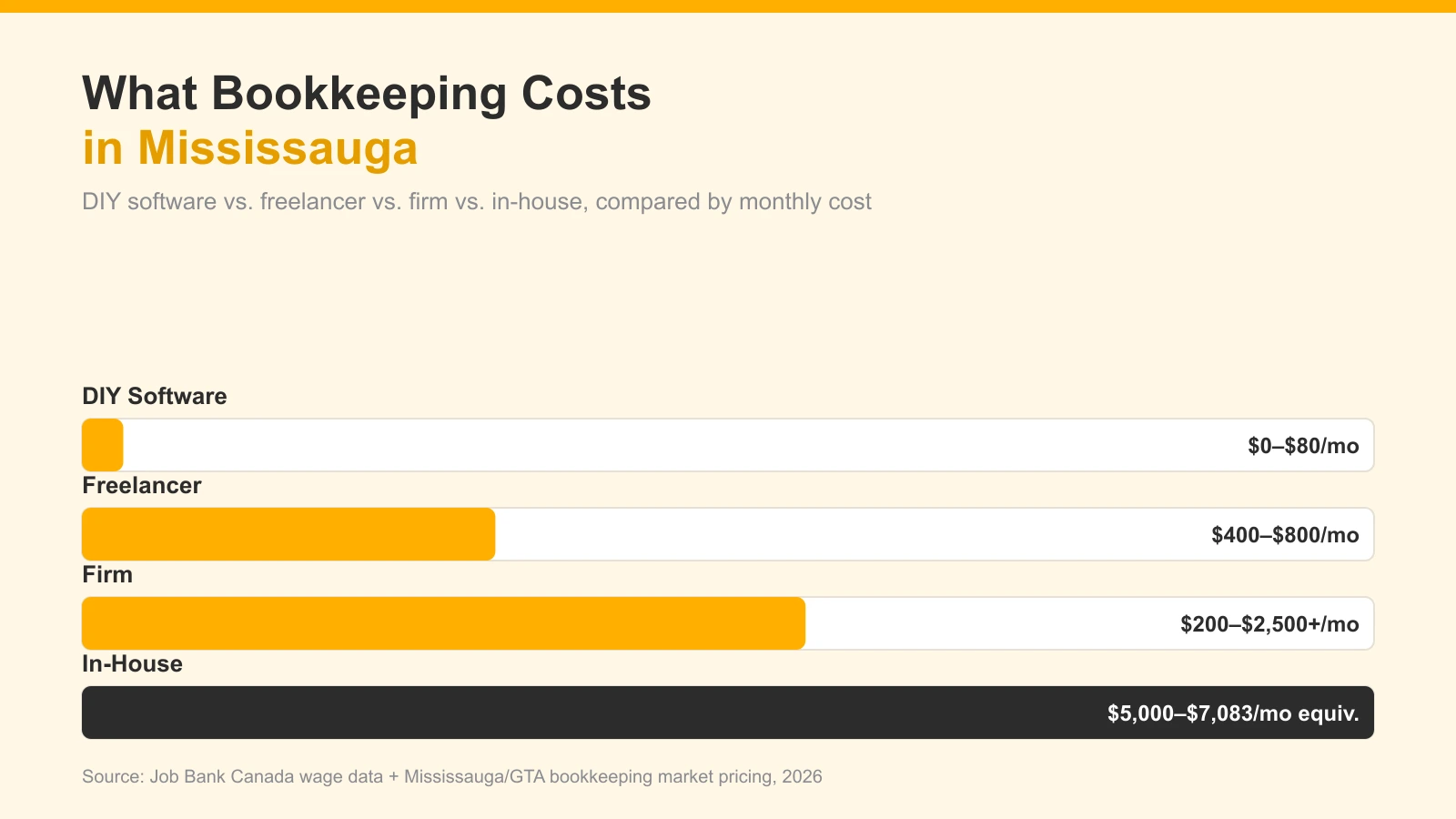
Bookkeeping in Mississauga costs anywhere from $20 a month if you run the software yourself to more than $2,500 a month for a firm managing multi-entity books with payroll and HST filing built in. Most small businesses pay somewhere between those extremes: $400 to $1,200 a month for an outsourced bookkeeper or small firm keeping single-entity books current, less if your books are simple and clean, more once you add payroll, multiple bank accounts, or a backlog to clean up first.
That range is wide because bookkeeping pricing depends on inputs most business owners don't think to ask about until they're comparing quotes: how many transactions move through your accounts each month, whether you're already caught up or six months behind, and whether HST filing and payroll are bundled in or billed separately. This guide breaks down what actually drives the number, using real wage data from Job Bank Canada and the pricing patterns bookkeeping providers across Mississauga and the GTA actually publish, so you can tell whether a quote you're holding is fair.
The Short Answer: What Bookkeeping Costs in Mississauga Right Now
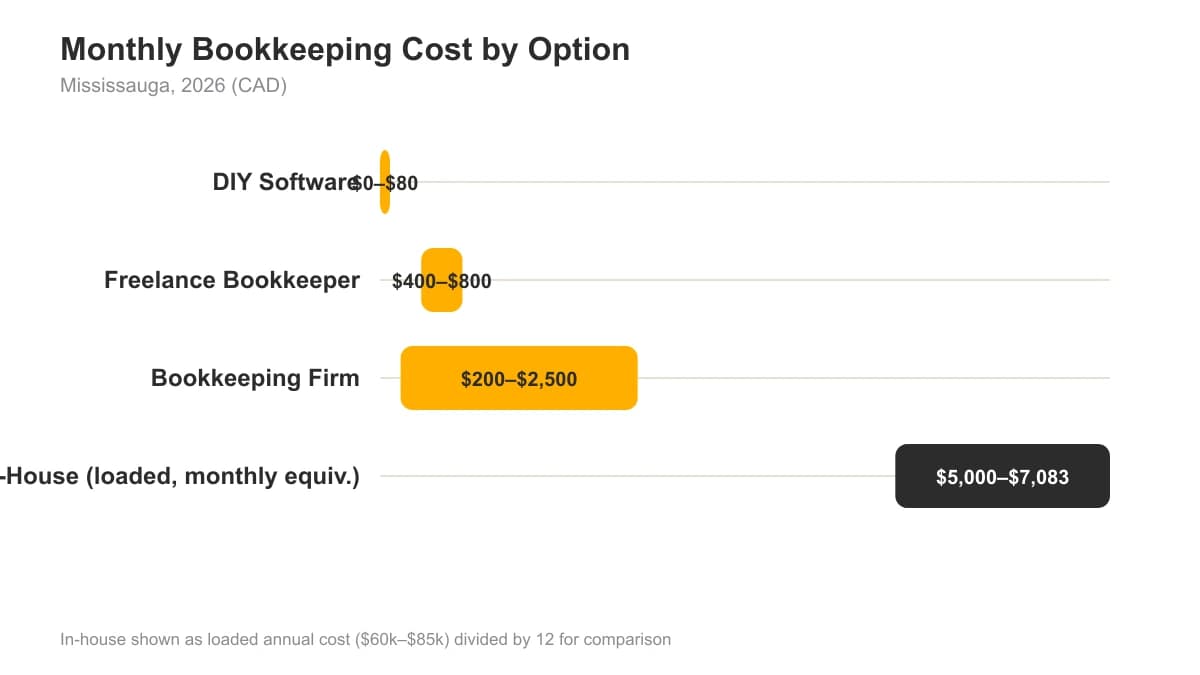
Here's the range compressed into one paragraph, broken out by who's doing the work. DIY software like Wave, QuickBooks Online, or Xero runs $0 to $80 a month, before counting your own time. A freelance bookkeeper typically charges $30 to $90 an hour, or $400 to $800 a month flat for a small business with clean, low-volume books. A bookkeeping or accounting firm bills $65 to $150 an hour, or a flat monthly retainer that climbs past $1,200 to $2,500 once payroll, HST filing, and multiple entities get added in. Hiring in-house costs $60,000 to $85,000 a year fully loaded, once payroll taxes, benefits, software, and a desk are counted, even though the salary line alone might read $40,000 to $77,000.
DIY software (Wave, QBO, Xero)
Typical Cost$0 to $80 / monthBest ForVery early-stage, low-volume businesses willing to do the workFreelance bookkeeper
Typical Cost$30 to $90 / hour or $400 to $800 / month flatBest ForSimple, single-entity books with steady, low transaction volumeBookkeeping or accounting firm
Typical Cost$65 to $150 / hour or $200 to $2,500+ / month flatBest ForBusinesses that want reviewed, audit-ready books and support beyond data entryIn-house employee
Typical Cost$60,000 to $85,000 / year fully loadedBest ForHigher-volume businesses needing daily, on-site bookkeeping
| Option | Typical Cost | Best For |
|---|---|---|
| DIY software (Wave, QBO, Xero) | $0 to $80 / month | Very early-stage, low-volume businesses willing to do the work |
| Freelance bookkeeper | $30 to $90 / hour or $400 to $800 / month flat | Simple, single-entity books with steady, low transaction volume |
| Bookkeeping or accounting firm | $65 to $150 / hour or $200 to $2,500+ / month flat | Businesses that want reviewed, audit-ready books and support beyond data entry |
| In-house employee | $60,000 to $85,000 / year fully loaded | Higher-volume businesses needing daily, on-site bookkeeping |
In-House vs. Outsourced: What an Employee Actually Costs vs. What a Firm Charges
Job Bank Canada, the federal government's labour market data source, put the median bookkeeper wage in Ontario at $28.50 an hour as of its most recent update, ranging from $19.23 at the low end to $46.15 for the most experienced hires. In the Toronto Region, the closest labour-market breakout that includes Mississauga (Job Bank doesn't publish a Peel-specific figure), the median sits slightly higher at $29.22 an hour, with a range of $18.00 to $47.36.
That's wage data, not a billing rate, and the two get confused constantly. A wage is what an employer pays before adding CPP and EI contributions, vacation pay, health benefits, a laptop, accounting software licenses, and the management time it takes to hire, train, and supervise someone. Once those costs are added, a full-time in-house bookkeeper earning $50,000 a year in salary typically costs a Mississauga business $60,000 to $85,000 a year in total, using the 20 to 40 percent payroll-loading range standard across the bookkeeping and HR industry.
An outsourced bookkeeper or firm, by comparison, usually lands at $4,000 to $12,000 a year for a small to mid-sized business, scaling with transaction volume and how many services are bundled in. There's no vacation pay, no benefits, no software licenses to buy, and no ramp-up time when someone leaves. That gap is why most businesses under roughly 15 to 20 staff outsource bookkeeping entirely and only bring it in-house once transaction volume or reporting needs justify a full-time hire.
DIY Software vs. Freelance Bookkeeper vs. Accounting Firm
The decision most Mississauga business owners actually face isn't in-house versus outsourced, since very few businesses under 20 staff hire in-house at all. It's a three-way choice between doing it yourself in software, hiring a freelancer, or working with an accounting firm. Here's how those three stack up on the things that actually matter.
Monthly cost
DIY Software$0 to $80Freelance Bookkeeper$400 to $800Accounting Firm$200 to $2,500+Your time per month
DIY Software5 to 15 hoursFreelance BookkeeperUnder 1 hourAccounting FirmUnder 1 hourCRA/audit risk
DIY SoftwareHighest, no second set of eyesFreelance BookkeeperModerate, depends on experienceAccounting FirmLowest, reviewed against standardsBackup if unavailable
DIY SoftwareNone, it's youFreelance BookkeeperOften noneAccounting FirmTeam coverageHandles HST/payroll too
DIY SoftwareNo, DIY onlyFreelance BookkeeperSometimes, ask firstAccounting FirmUsually bundled
| DIY Software | Freelance Bookkeeper | Accounting Firm | |
|---|---|---|---|
| Monthly cost | $0 to $80 | $400 to $800 | $200 to $2,500+ |
| Your time per month | 5 to 15 hours | Under 1 hour | Under 1 hour |
| CRA/audit risk | Highest, no second set of eyes | Moderate, depends on experience | Lowest, reviewed against standards |
| Backup if unavailable | None, it's you | Often none | Team coverage |
| Handles HST/payroll too | No, DIY only | Sometimes, ask first | Usually bundled |
If transaction volume is under roughly 30 to 50 a month and the books are already clean, DIY software is genuinely fine, and paying someone else to do work that takes an afternoon doesn't make financial sense yet. Past that volume, or the moment HST filing, payroll, or a CRA review enters the picture, the time spent doing it yourself starts costing more than a freelancer's invoice, even before counting the risk of an error nobody catches. Firms earn their premium over freelancers mainly through backup coverage: a freelancer who gets sick, takes a vacation, or leaves the business entirely can leave books untouched for weeks, while a firm has a team behind the file.
What Actually Moves the Price
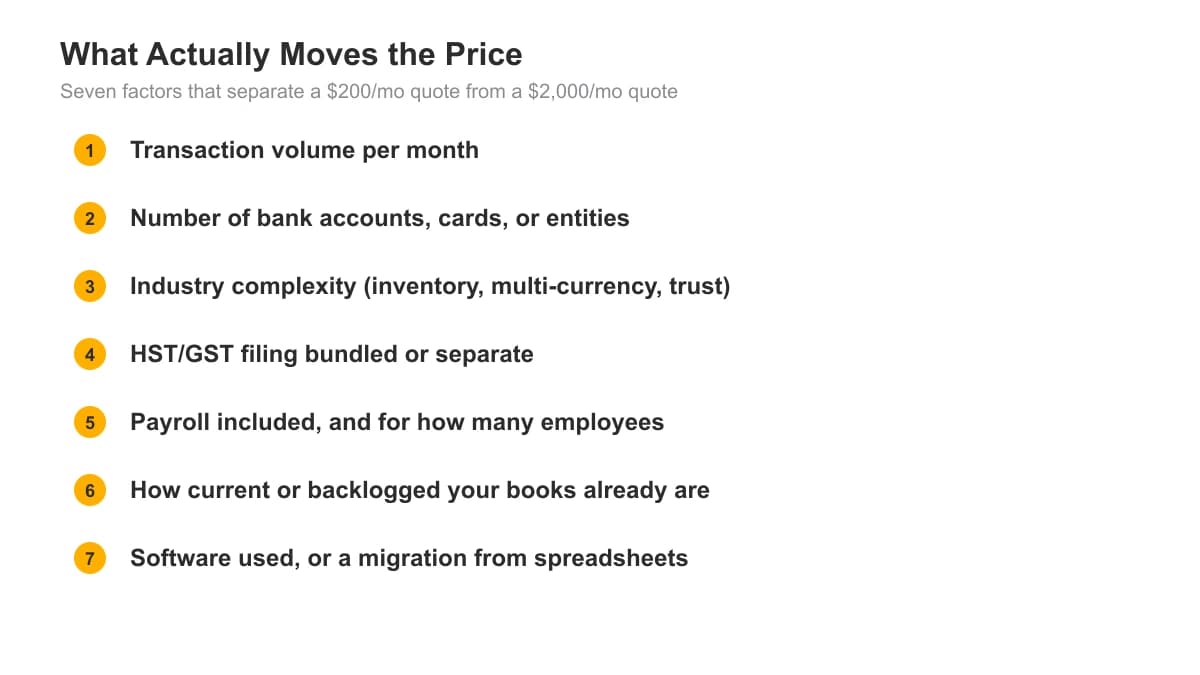
Two businesses with identical revenue can get wildly different bookkeeping quotes, and it's rarely arbitrary. These are the factors that move the number, roughly in the order they matter:
- Transaction volume: a business processing 50 transactions a month costs less to keep books for than one processing 500, regardless of revenue.
- Number of bank accounts, credit cards, or entities, since every account needs its own reconciliation.
- Industry complexity: inventory, multi-currency sales, or trust accounting (used by law and real estate firms) all take longer to reconcile than a straightforward service business.
- Whether HST/GST filing is bundled in or billed as a separate line item.
- Whether payroll is included, and for how many employees.
- How clean the books already are, since a backlog changes the price structure entirely.
- Software used, since migrating from spreadsheets or an unsupported platform adds a one-time setup cost most quotes don't mention upfront.
HST/GST filing
Typical Cost$80 to $100 / monthPayroll processing
Typical Cost$30 to $60 / employee / monthYear-end financial statements
Typical Cost$300 to $900, depending on complexityAccounting software setup or migration
Typical CostOne-time fee, varies by scope
| Add-on Service | Typical Cost |
|---|---|
| HST/GST filing | $80 to $100 / month |
| Payroll processing | $30 to $60 / employee / month |
| Year-end financial statements | $300 to $900, depending on complexity |
| Accounting software setup or migration | One-time fee, varies by scope |
Most firms, including ours, price HST/GST filing and payroll separately from core bookkeeping, since both carry their own CRA deadlines and remittance schedules. If you're switching software or coming off spreadsheets, expect a one-time setup or migration fee on top of the recurring monthly cost, since someone has to build a proper chart of accounts and connect bank feeds correctly the first time.
Behind on Your Books? What Catch-Up Bookkeeping Costs
Catch-up bookkeeping, sometimes called backlog or cleanup bookkeeping, is priced differently from ongoing monthly work, and it's the part most competitor pricing pages gloss over entirely. The farther behind the books are, the more each month costs to reconstruct, because missing invoices and unreconciled statements from a year ago take real research to track down.
1 to 3 months
Typical Fee per Month Behind$150 to $300 / month behindTypical Total Project Cost$200 to $9003 to 6 months
Typical Fee per Month Behind$250 to $500 / month behindTypical Total Project Cost$750 to $3,0006 to 12 months
Typical Fee per Month Behind$400 to $700 / month behindTypical Total Project Cost$2,400 to $8,40012+ months or multiple years
Typical Fee per Month Behind$600 to $1,200+ / month behindTypical Total Project CostQuoted per project after a records review
| How Far Behind | Typical Fee per Month Behind | Typical Total Project Cost |
|---|---|---|
| 1 to 3 months | $150 to $300 / month behind | $200 to $900 |
| 3 to 6 months | $250 to $500 / month behind | $750 to $3,000 |
| 6 to 12 months | $400 to $700 / month behind | $2,400 to $8,400 |
| 12+ months or multiple years | $600 to $1,200+ / month behind | Quoted per project after a records review |
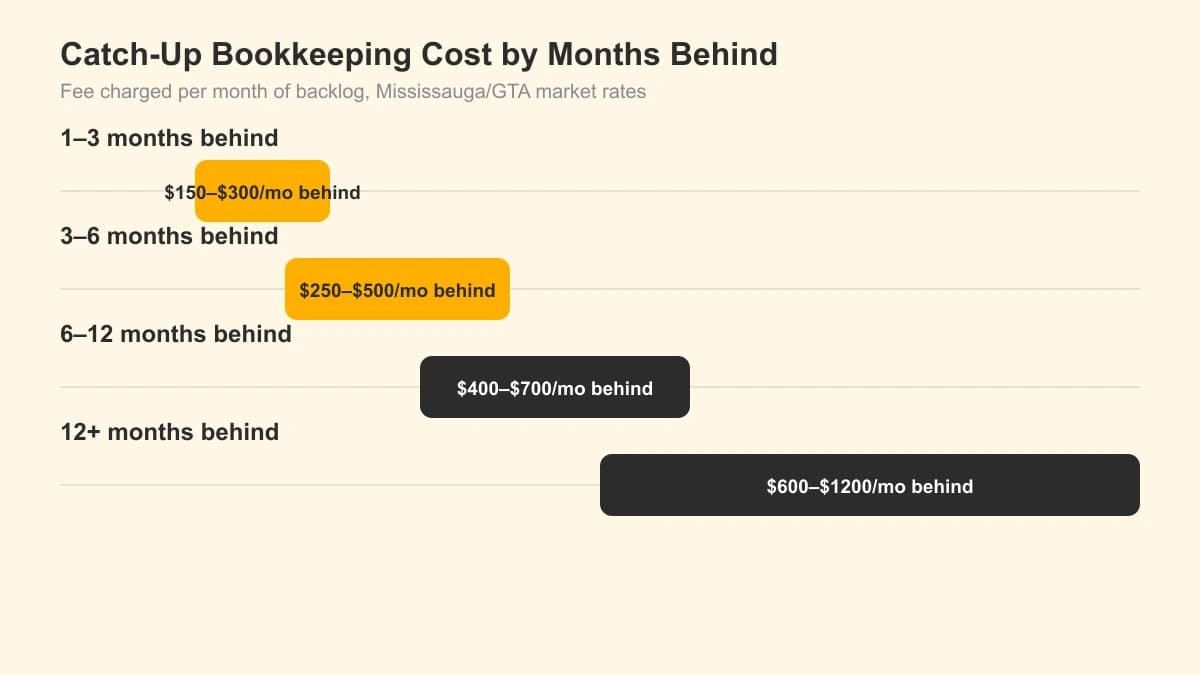
The jump between brackets isn't a firm padding its invoice. A three-month gap usually means reconciling against bank statements still available in a few clicks. A two-year gap can mean requesting statements from a bank that's since switched platforms, reconstructing HST filings that were never done, and untangling personal and business expenses that got mixed together along the way. Our backlog accounting service starts with a records review specifically because a fair catch-up quote can't be given without seeing how messy the actual gap is first.
Mississauga and Peel Region vs. Toronto: Does Location Change the Price?
Job Bank Canada doesn't publish a bookkeeper wage figure specifically for Peel Region or Mississauga; the closest available breakout is the Toronto Region, which covers the wider GTA labour market Mississauga sits inside. That regional median was $29.22 an hour as of the most recent data, only slightly above the province-wide Ontario median of $28.50, with Ottawa running highest among Ontario's major regions at $32.93 an hour.
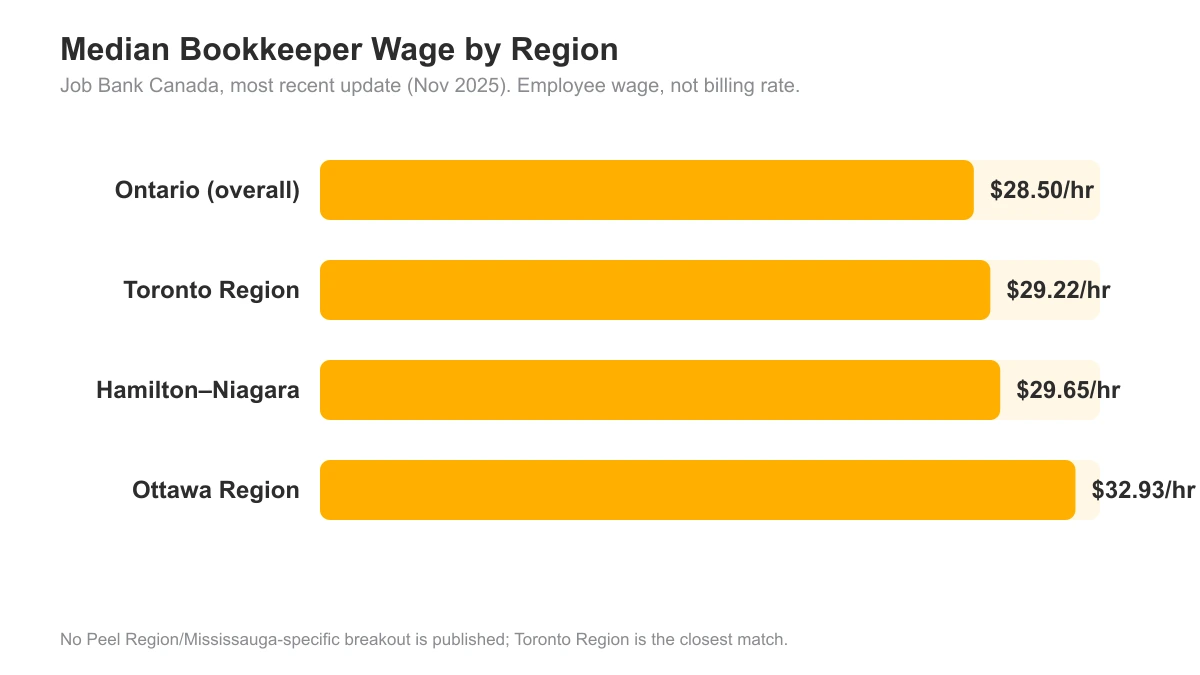
In practice, that means bookkeeping pricing in Mississauga tracks close to Toronto and the wider GTA rather than sitting meaningfully below it, since firms serving Mississauga businesses draw from the same regional labour pool and compete for the same talent. Anyone quoting a rate dramatically below the ranges in this guide, citing “Mississauga pricing” as the reason, is either working with far less experience or leaving something out of the scope, and it's worth asking directly what's excluded before signing anything.
What to Look for Beyond the Sticker Price
Price alone tells you almost nothing about whether a bookkeeping quote is actually a good deal. A few things matter more than the number on the invoice.
Ask whether the person or firm doing the books is a Certified Professional Bookkeeper (CPB), the credential issued by CPB Canada. It signals a tested standard of technical competence and adherence to a professional code of ethics, similar to what a CPA designation signals for accountants, though the two credentials cover different scopes of work. A bookkeeper reconciles accounts and keeps records accurate; a CPA can also represent a business before CRA and sign off on more complex tax filings. Knowing which one is actually being hired, and what happens once the books outgrow it, avoids a scramble later.
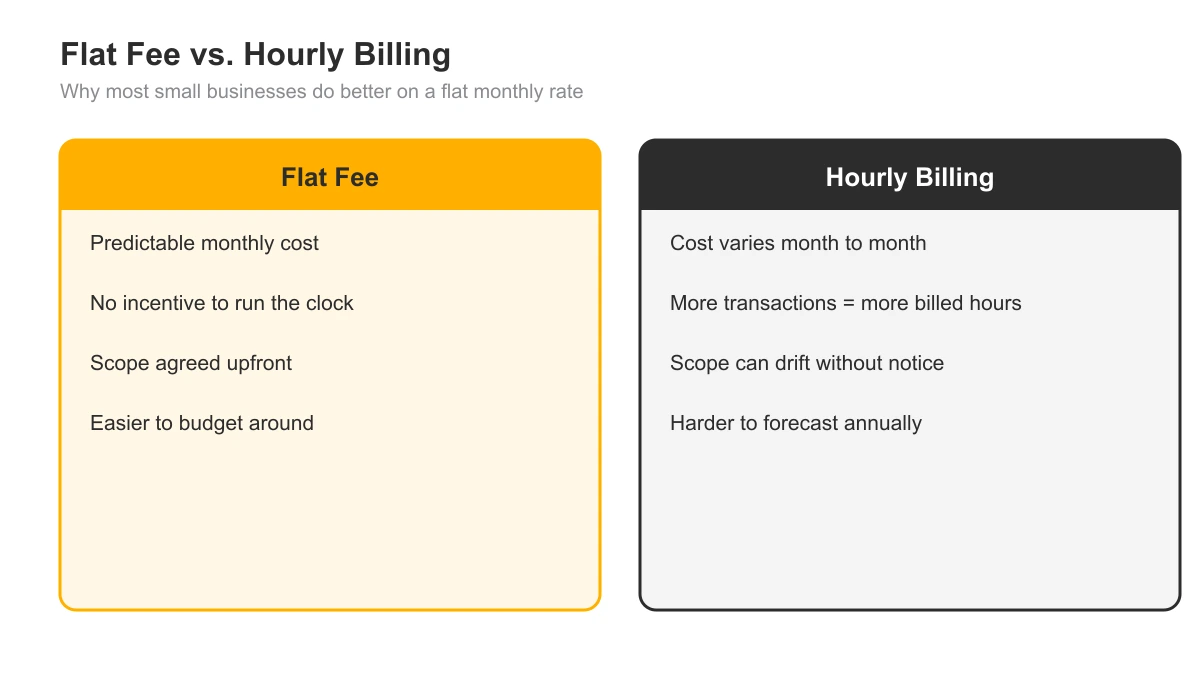
A flat monthly fee that specifies exactly what's included beats a lower hourly rate with an open-ended scope, almost every time.
Flat-fee pricing tends to serve small businesses better than hourly billing, mainly because it removes the incentive to run the clock and makes the monthly cost predictable enough to actually budget around. If a quote is hourly, ask for a monthly estimate based on actual transaction volume before agreeing to anything, and get in writing what's included: reconciliations, HST filing, financial statements, and how many questions or check-ins are covered before extra charges kick in.
What It Costs to Work With Us
Our own bookkeeping pricing runs $200 to $600 a month, positioned at the lean end of the ranges in this guide because most of our bookkeeping clients come to us with straightforward, single-entity books and grow the scope from there. Where a business lands in that range depends mainly on transaction volume and whether HST filing or payroll gets bundled in. If the books have a backlog, that's quoted separately after a records review, using the same catch-up brackets outlined above, so nobody pays ongoing-bookkeeping rates for backlog work.
If you want an actual number instead of a range, the fastest way to get one is a short call. We'll ask about your transaction volume, current software, and how far behind, if at all, your books are, and give you a flat monthly quote before you commit to anything. Book a free call and we'll walk through your numbers directly.
On this page
Never miss a deadline again
We track every filing date for our clients. Let us watch yours.
Book a free callAccounting Firm Mississauga Team
A practice of expert accountants filing returns for Mississauga businesses and individuals for close to a decade. We write these to answer the questions clients actually ask.
Frequently Asked Questions
How much does a bookkeeper cost per hour in Mississauga?
Freelance bookkeepers in Mississauga typically charge $30 to $90 an hour, while bookkeeping and accounting firms bill $65 to $150 an hour. Most small businesses end up on a flat monthly fee instead of hourly billing once their transaction volume is predictable, since it's easier to budget around.
Is it cheaper to do my own bookkeeping or hire someone?
DIY software costs less on paper, $0 to $80 a month, but it isn't actually free once you count the 5 to 15 hours a month most owners spend on it. Past roughly 30 to 50 transactions a month, or once HST filing and payroll enter the picture, hiring a freelancer or firm usually costs less than the value of the time you'd spend doing it yourself.
How much does it cost to catch up on backlogged bookkeeping?
Catch-up bookkeeping is priced by how far behind you are, typically $150 to $300 per month behind for a light backlog under three months, rising to $600 to $1,200 or more per month behind once you're a year or more behind, since older records take longer to reconstruct.
What's the difference between a bookkeeper and an accountant, and does it affect price?
A bookkeeper records transactions, reconciles accounts, and keeps books current; a CPA can also prepare and file corporate or personal tax returns and represent you before CRA. Bookkeeping is generally billed at a lower rate than accounting or tax work because it doesn't require the same credential, though many firms bundle both under one flat fee.
Do bookkeeping fees include HST/GST filing?
Not usually. Most firms, including ours, price HST/GST filing separately from core bookkeeping, typically $80 to $100 a month, since it carries its own CRA deadlines and remittance calculations. Always ask whether a quote includes filing or just the underlying bookkeeping before comparing prices.
How do I know if a bookkeeping quote is fair?
Compare it against the ranges in this guide based on how it's billed (DIY, freelance, firm, or in-house) and what's included. A fair quote specifies transaction volume assumptions, whether HST/GST and payroll are bundled, and what happens if your volume grows. Quotes with no clear scope, or rates dramatically below market for your region, are worth questioning before you sign anything.
Recent posts
View all →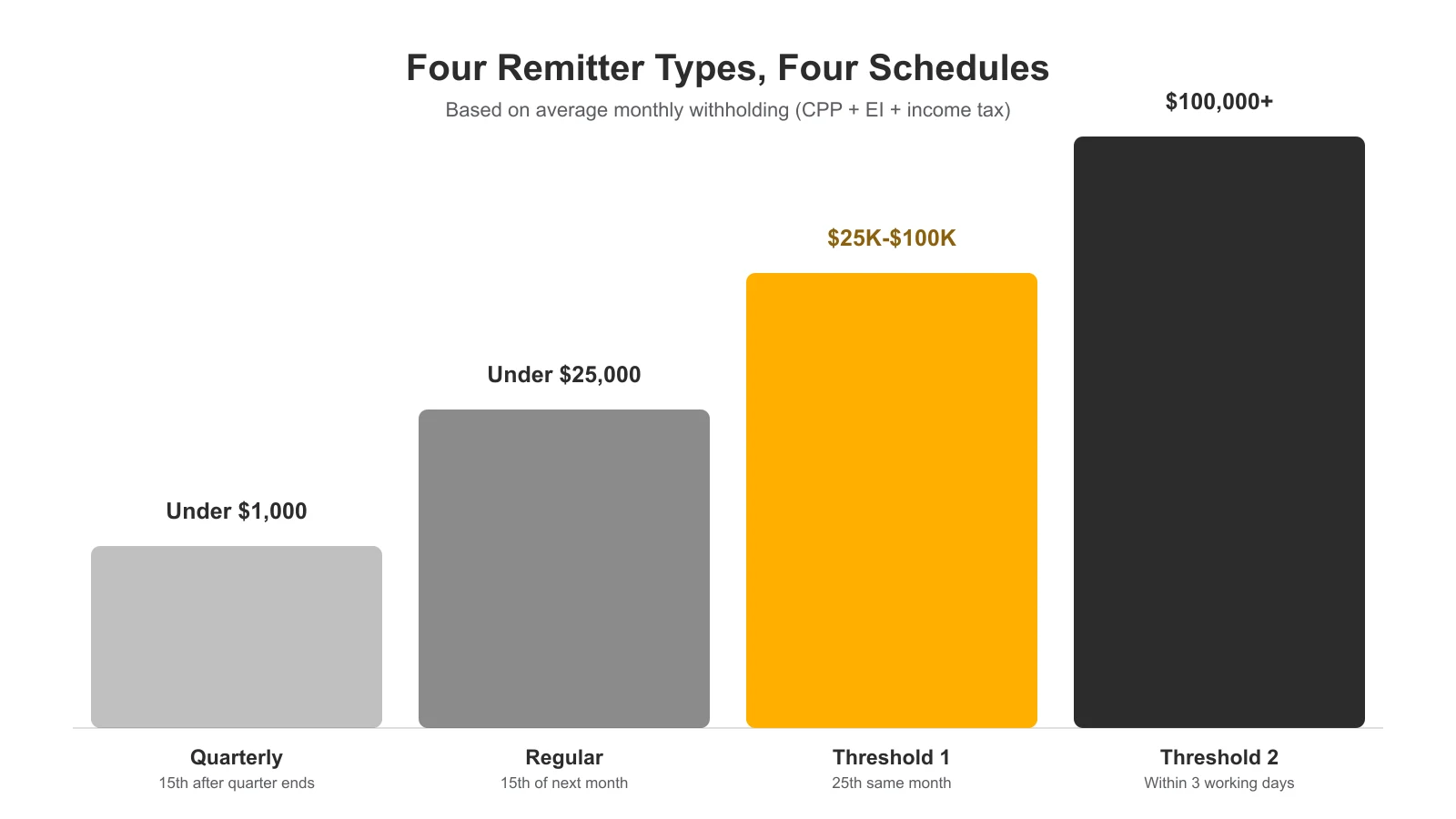 Payroll
Payroll Remittance Deadlines: What New Employers Actually Need to Know
Priya's corporation just became a remitter for the first time. Real 2026 numbers on remitter types, due dates, and the penalty rule most guides get wrong.
 Audit & Assurance
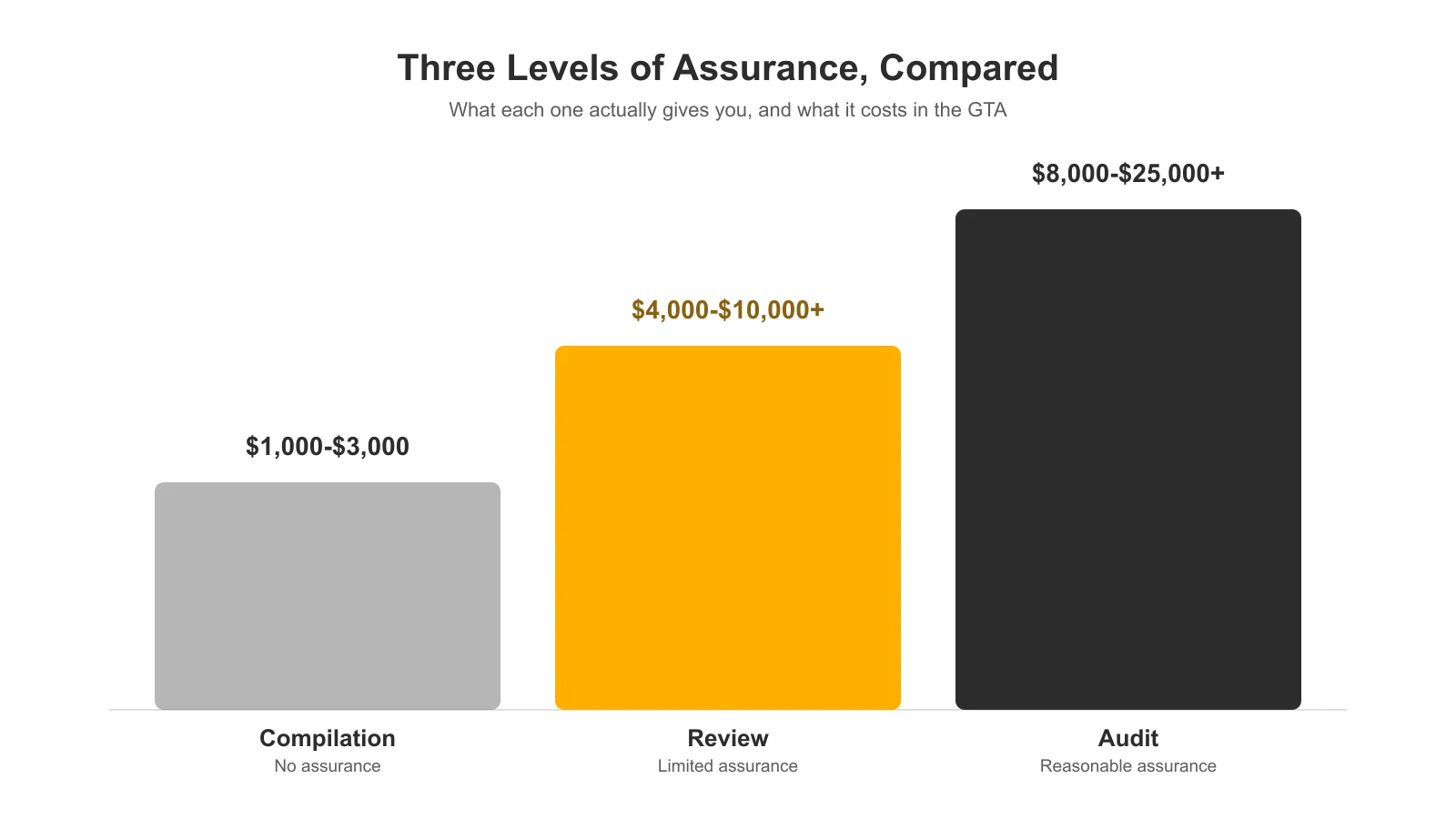
Audit vs. Review vs. Compilation: What Your Business Actually Needs
A bank, franchisor, or investor just asked for "reviewed" or "audited" statements. Here's what each assurance level actually means, what it costs in the GTA, and how to know which one applies to you.
 Corporate Tax
Should You Incorporate? What It Actually Changes About Your Taxes
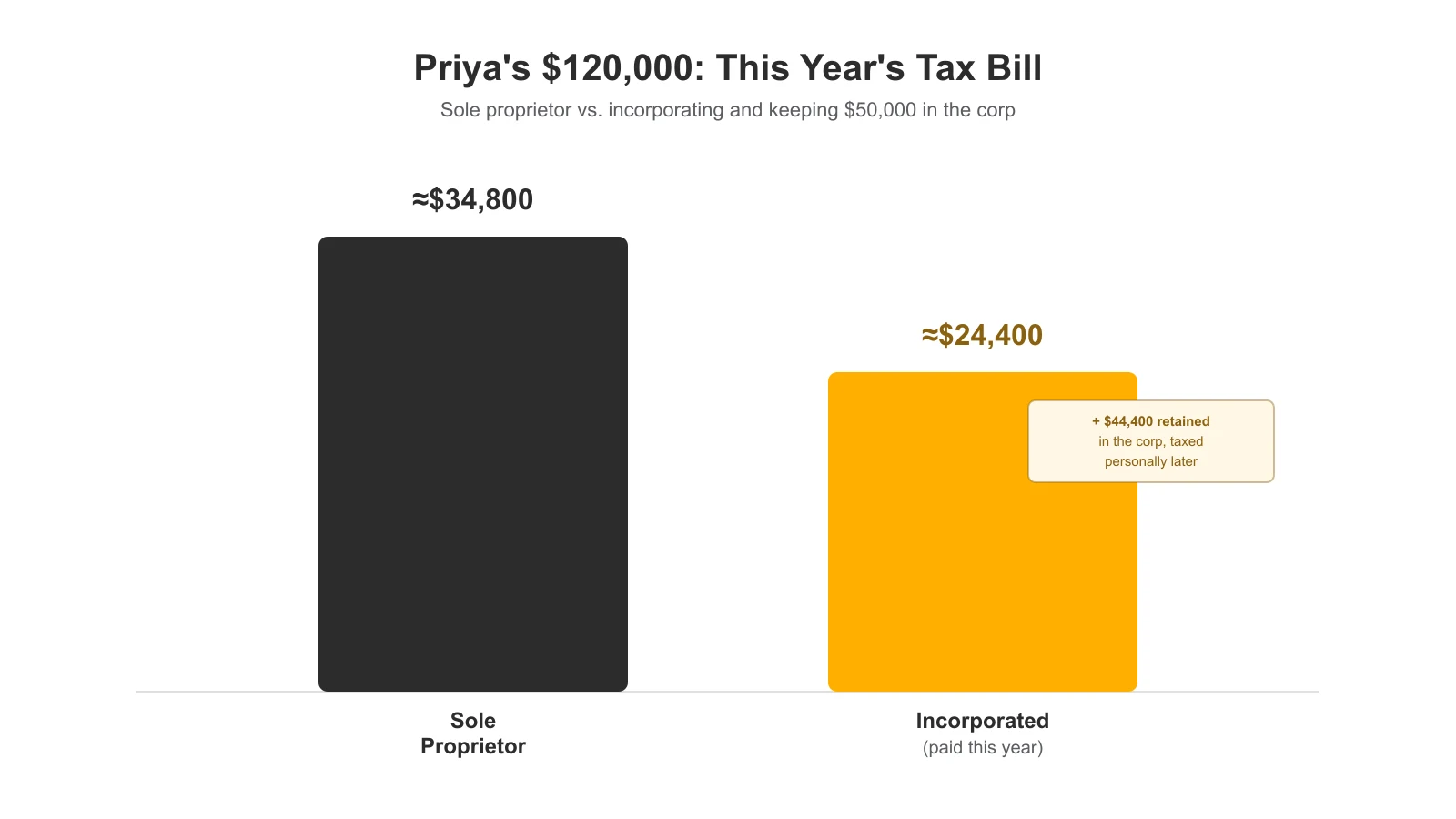
Incorporating doesn't erase your tax bill, it defers it. A real worked example, using 2026's new small business rate, of what actually changes when you stop being a sole proprietor.
Free Consultation
Tell Us What You Need. Get a Real Answer Back.
No sales script, no obligation. Describe your situation once and an accounting specialist will follow up with a straight answer and a flat quote.
- Flat-fee quote before any work starts
- Response within one business day
- Reviewed by an expert accountant, not just a bookkeeper